The Taper Tax Trap on Pensions: What It Is and Who It Hits
People call it a trap because it feels like one. You earn more, you pay more into your pension, and then the tax rules cut the amount you are allowed to put in. This post explains what the taper tax trap on pensions is, who it hits, and how to check whether it hits you. To check your own figures, use the Tapered Pension Allowance Calculator.
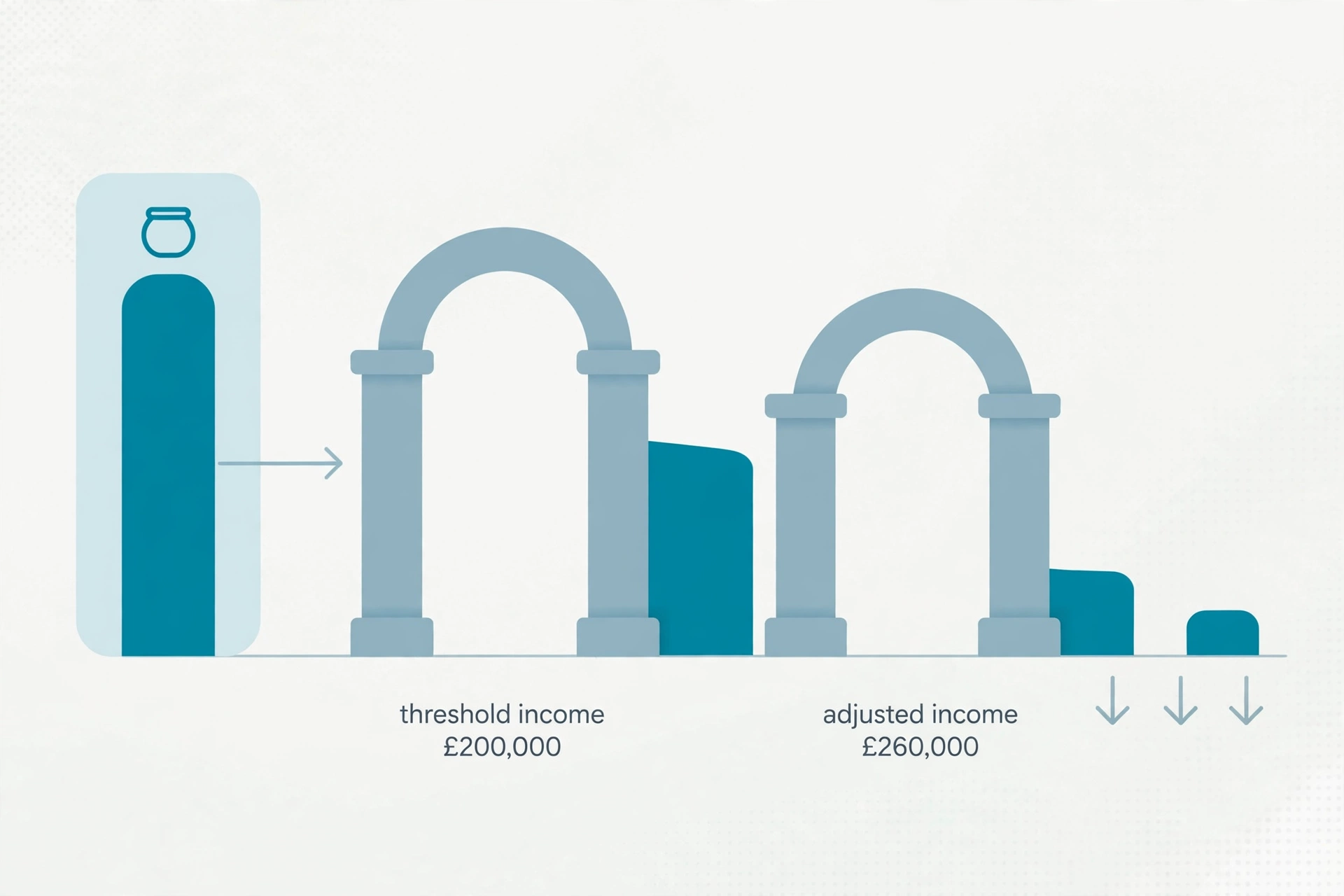
Direct answer: The taper tax trap on pensions is the tapered annual allowance, which cuts the standard £60,000 pension allowance for high earners, according to HMRC and GOV.UK. It applies only if your threshold income is over £200,000 and your adjusted income is over £260,000, according to GOV.UK. Your allowance then shrinks by £1 for every £2 of adjusted income over £260,000, down to a £10,000 minimum, according to GOV.UK.
Key Takeaways
The short answer is that the trap is a smaller pension allowance for very high earners.
- The taper is not a tax rate. It is a cut to how much you can put into a pension with tax relief.
- Both gates must be passed before tapering starts: threshold income over £200,000 and adjusted income over £260,000, according to GOV.UK.
- At £360,000 or more of adjusted income, the allowance is £10,000, according to the GOV.UK taper rule.
- If your threshold income is £200,000 or less, you are never tapered, no matter how high your adjusted income is, according to GOV.UK.
- The taper trap is different from the 60% tax trap at £100,000, which belongs to the 60% Tax Trap Calculator.
What is the taper tax trap on pensions?
The taper tax trap is the tapered annual allowance, and it works by shrinking your pension allowance as your income rises.
The standard annual allowance is £60,000, according to HMRC and GOV.UK. That is the most you can normally put into pensions in a tax year with tax relief. For high earners, the allowance tapers down. The word taper means it falls bit by bit, not all at once. It falls by £1 for every £2 of adjusted income over £260,000, according to GOV.UK, until it reaches the £10,000 minimum.
The trap feeling comes from the way adjusted income is counted. Adjusted income includes your employer pension contributions, so a generous employer pension can push you over the £260,000 line even when your salary alone is lower. A pay rise or a big bonus can do the same thing in a single year.
Who does the taper trap hit?
It hits people whose threshold income is over £200,000 and whose adjusted income is over £260,000 in the same tax year.
Both conditions must apply at the same time, according to GOV.UK. If only one is true, there is no taper. The most important protection is the threshold income gate. If your threshold income is £200,000 or less, you are never tapered, no matter what your adjusted income is, according to GOV.UK.
In practice, the people affected are senior employees, partners, directors and anyone with a large bonus or large employer pension contributions. On Reddit, people in r/UKPersonalFinance ask the same worry in their own words: “will pension tapering affect me” and “have I breached annual pension limit”. A quick check of both income gates settles those two questions in seconds.
How much allowance do you lose?
You lose £1 of allowance for every £2 of adjusted income over £260,000, down to a £10,000 minimum, according to GOV.UK.
Here is what that looks like in practice. At £280,000 of adjusted income, you lose £10,000 and keep £50,000. At £300,000, you lose £20,000 and keep £40,000. At £320,000, you lose £30,000 and keep £30,000. At £340,000, you lose £40,000 and keep £20,000. At £360,000 or more, you keep only £10,000. This table is the GOV.UK rule worked out step by step, and it was verified against the GOV.UK taper page on 14 November 2026.
The loss is real money. If your pension savings are more than your reduced allowance, the excess is added to your taxable income and you pay Income Tax on it at the rate that applies to you, according to GOV.UK. That is why checking before the tax year ends matters more than checking after it.
Is the taper trap the same as the 60% tax trap?
No, and mixing the two up is the most common mistake in this area.
The 60% tax trap is the loss of your personal allowance once your adjusted net income goes over £100,000, and it is covered in full by the 60% Tax Trap Calculator. The taper trap is the loss of your pension annual allowance once your threshold income goes over £200,000 and your adjusted income goes over £260,000. They hit different income bands, they use different income measures, and they need different calculators.
If your income is around £100,000, the taper trap does not apply to you. If your income is over £200,000, the taper trap is the one to check, and the 60% trap may also apply. Use the right tool for your income band.
Frequently asked questions
Short answers to the questions people ask most are below.
-
What is the taper tax trap on pensions? The taper tax trap is the tapered annual allowance. It cuts the standard 60,000 pound pension allowance for high earners by £1 for every £2 of adjusted income over £260,000, down to a 10,000 pound minimum, according to GOV.UK.
-
Who does the taper tax trap hit? It hits people whose threshold income is over £200,000 and whose adjusted income is over £260,000 in the same tax year, according to GOV.UK. Both gates must be passed.
-
Is the taper trap the same as the 60% tax trap? No. The 60 percent tax trap is the loss of personal allowance over £100,000 of adjusted net income. The taper trap is the loss of pension annual allowance over £200,000 of threshold income and £260,000 of adjusted income.
-
What happens if I pay in more than my tapered allowance? The excess is added to your taxable income and you pay Income Tax on it at the rate that applies to you, according to GOV.UK.
How to use the tapered pension allowance calculator
The calculator tells you in seconds whether the taper trap hits you, and by how much.
Put in your salary and bonus, any other taxable income, and the pension contributions from you and your employer, and the trap test runs on those figures. It works out your threshold income and adjusted income, shows whether tapering applies, shows your reduced allowance, and shows your excess and your carry forward from the previous 3 years. Your trap answer appears straight away, with no email address asked for and no account to create.
The benefits are simple. You see both gates separately, so you know which one you pass or fail. You see the taper shown step by step, so you can check the maths. And you get a worked example in your own numbers, which is the answer the forums never gave. Try it now on the Tapered Pension Allowance Calculator.
To understand the taper rule itself in more detail, read What Is the Taper? The £1 for £2 Rule, Explained.
Sources
- GOV.UK, “Work out your reduced (tapered) annual allowance”, for the £200,000 threshold income gate, the £260,000 adjusted income gate, the £1 for £2 taper rule, the £10,000 minimum, and the tax treatment of the excess. Taper figures verified against this page on 14 November 2026.
- HMRC and GOV.UK, for the standard annual allowance of £60,000.
- GOV.UK, “Income Tax rates and Personal Allowances”, for the personal allowance falling by £1 for every £2 of adjusted net income over £100,000, to zero at £125,140.
Disclaimer: This post gives general information only. Figures are estimates only, not financial advice. Verify with HMRC guidance or a qualified tax adviser before you act.
Last verified: 16 November 2026
Article and FAQ schema
The schema below matches the questions answered in this post.